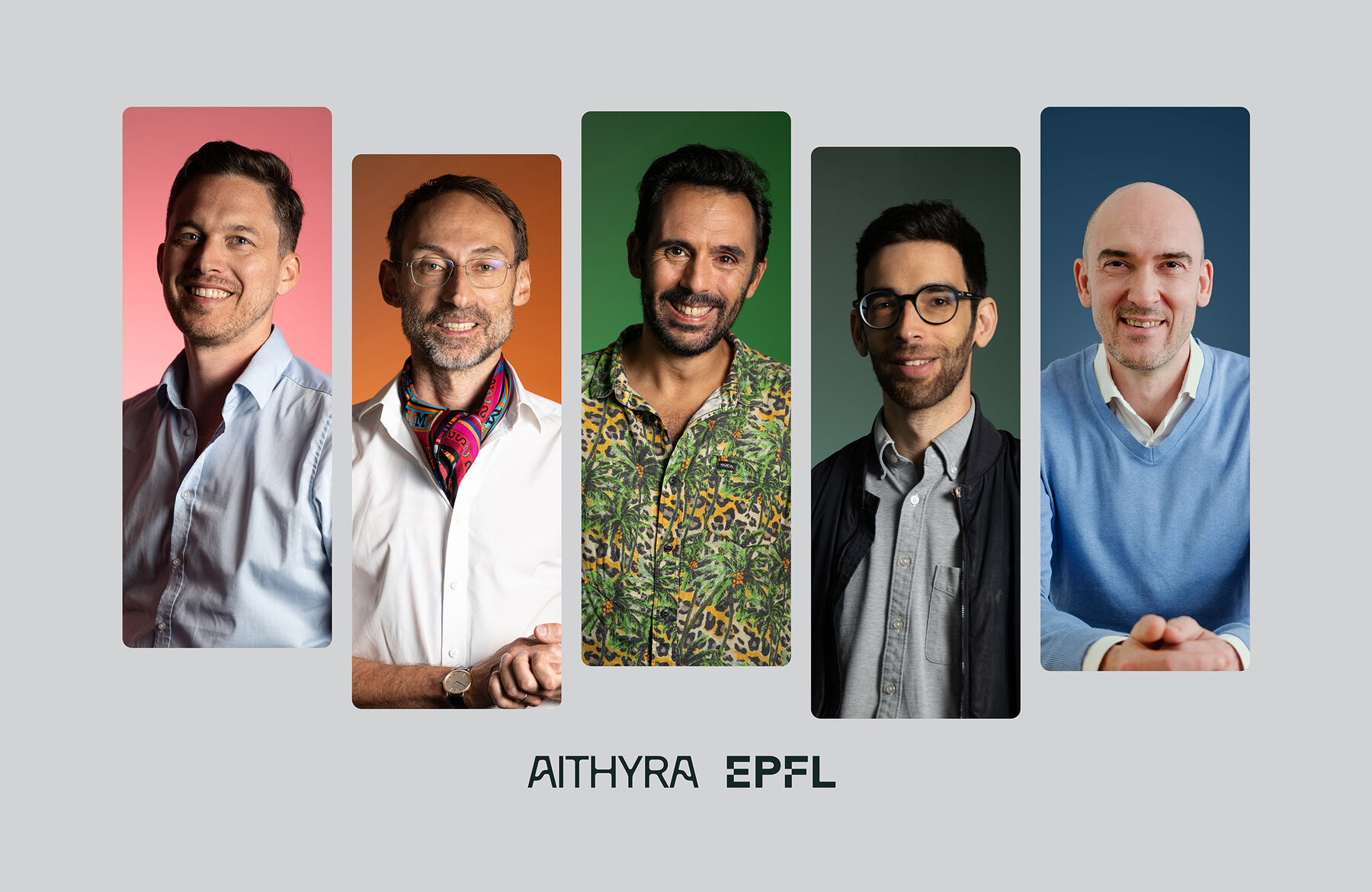
The Google.org Impact Challenge: AI for Science provides $2.4 million over three years for an interdisciplinary AITHYRA-EPFL consortium for their project “Beyond Serendipity: Using Generative AI to Decode Viral Hijacking for Rational Drug Design”.
On 14 October 2026, Google announced the recipients of its prestigious Google.org Impact Challenge: AI for Science.
An AITHYRA-EPFL consortium consisting of Michael Bronstein (Scientific Director AI, AITHYRA), Jason Nomburg (Principal Investigator in Structural Systems Virology, AITHYRA), Georg Winter (Scientific Director Life Sciences, AITHYRA), Bruno Correia (Global Adjunct Principal Investigator at AITHYRA and Full Professor for Protein Design & Immunoengineering at EPFL), and Nicolas Thomä (Full Professor, Paternot Chair in Cancer Research at EPFL) has been selected as one of the winning teams in the open 2026 call.
Current therapeutic approaches can modulate only 5-10% of the human proteome, leaving the vast majority of disease-relevant proteins beyond the reach of conventional medicines. New strategies are urgently needed to uncover and target previously overlooked cellular vulnerability sites.
Viruses could offer a natural roadmap to identify such sites. Through billions of years of evolution, viral proteins have evolved to target critical regulatory nodes and hijack the cellular machinery. The consortium aims to use viruses as informers to reveal potential therapeutic entry points across the cell. By combining generative machine learning to map virus-host interaction sites with high-throughput functional assays to profile the cellular relevance of these loci, the team aims to translate viral evolution into predictive drug design for intractable disease.
According to Google.org Impact Challenge: AI for Science, AITHYRA - together with two scientists from EPFL – is one of 17 organizations selected globally from more than 3,000 applications across 30 countries to share an updated total of $36 million in funding. By receiving $2.4 million for the next three years the AITHYRA-EPFL consortium will be put in a position to conduct cutting edge research, using generative AI to decode viral hijacking for rational drug design, thereby going beyond serendipity.
About the Google.org Impact Challenge: AI for Science
The overall aim of the Google.org Impact Challenge 2026: AI for Science is to accelerate scientific breakthroughs with the power of AI. By empowering researchers with catalytic funding and technical expertise, Google Impact Challenge aims at accelerating the understanding of key scientific questions—achieving Nobel-level breakthroughs and enabling science at digital speed. The Google.org Impact Challenge: AI for Science was a $30M global open-call designed to empower researchers and organizations with the funding, tools, and technical expertise they need to accelerate scientific breakthroughs. Beyond funding, organizations may participate in a Google.org Accelerator and receive six months of dedicated pro bono technical support from Google experts and access to Google Cloud credits to help bring these projects to life.
Link to blog post announcement (results): https://goo.gle/gic-ai-science
To learn more on the Google.org Impact Challenge 2026: AI for Science call, visit: Google.org Impact Challenge: AI for Science
#Googleorg #AIforScience #AITHYRA #EPFL